
Build Trust & Credibility
It demonstrates that the organization follows best practices, building trust and helping move contracts forward faster.
Precision-Driven Cybersecurity Solutions

Ensures that personal data stored or processed in public cloud environments is secure, managed responsibly, and compliant with privacy regulations, building trust and reducing the risk of breaches.
Let's TalkISO 27018 is an international standard that focuses on protecting Personally Identifiable Information (PII) processed in public cloud environments by cloud service providers. It ensures that personal data stored or processed in the public cloud remains safe and is handled responsibly. This standard is designed for companies that manage personal data on behalf of others. ISO 27018 is based on ISO 27001 but adds additional privacy-specific controls. Its goal is to ensure that personal information—such as names, emails, credit card numbers, and phone numbers—is used appropriately, stored securely, and never shared without permission.
As part of the ISO 27000 family, it helps reduce information security risks related to PII in cloud environments and provides transparency, helping customers feel confident that their data is managed properly. ISO 27018 also requires that personal data be returned or securely deleted once the service contract ends, based on customer instructions. Additionally, it includes guidance on where personal data is stored and whether it is transferred across countries, helping organizations comply with local data privacy laws.
Why It Is Important
It demonstrates that the organization follows best practices, building trust and helping move contracts forward faster.

It helps meet local and international data protection laws such as GDPR and HIPAA.

It reduces the risk of data breaches, leaks, and misuse through security controls specific to PII in the cloud.

It helps distinguish between sensitive and non-sensitive data for proper handling.

It helps in clarifying roles and responsibilities which avoids any kind of confusion between the cloud provider and the customer.

It supports international expansion, making it easier for cloud providers to operate in different countries and win global clients.

It encourages employee training on how to handle PII properly, raising awareness and reducing accidental mistakes.
It demonstrates that the organization follows best practices, building trust and helping move contracts forward faster.
It helps meet local and international data protection laws such as GDPR and HIPAA.
It reduces the risk of data breaches, leaks, and misuse through security controls specific to PII in the cloud.
It helps distinguish between sensitive and non-sensitive data for proper handling.
It helps in clarifying roles and responsibilities which avoids any kind of confusion between the cloud provider and the customer.
It supports international expansion, making it easier for cloud providers to operate in different countries and win global clients.
It encourages employee training on how to handle PII properly, raising awareness and reducing accidental mistakes.
What Our Solution Delivers
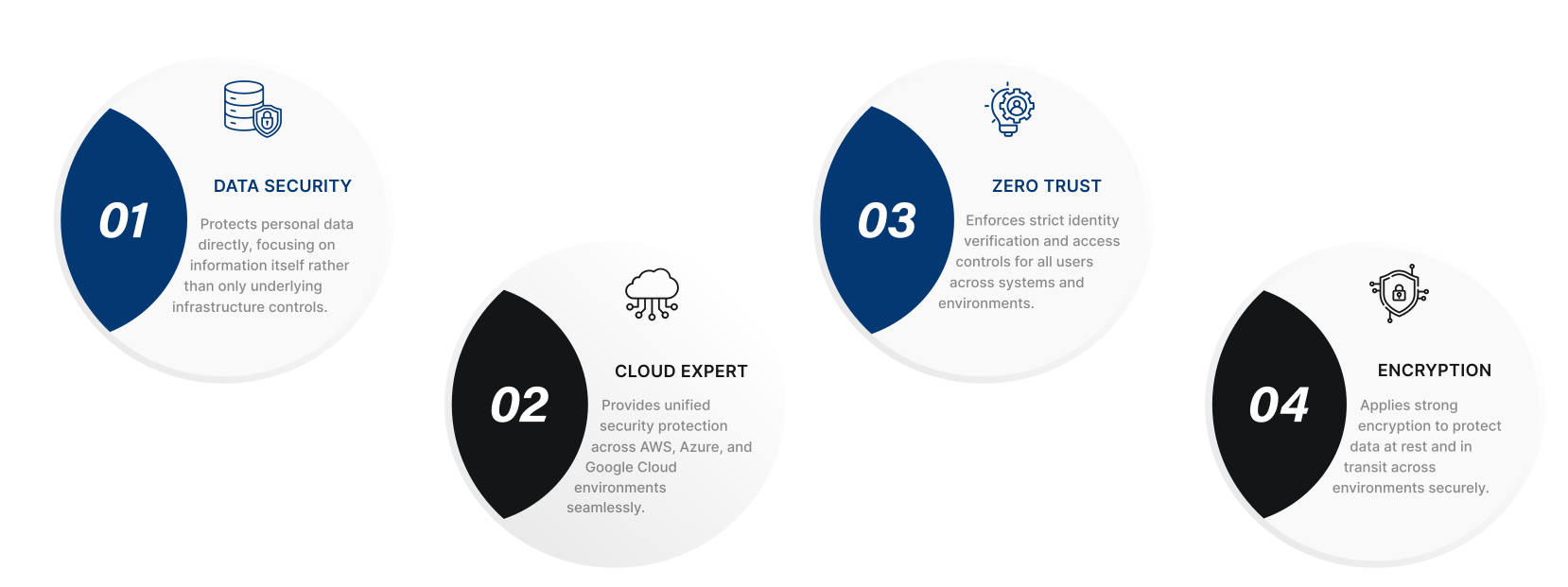
Our Protection of PII in Public Clouds solution safeguards personally identifiable information stored or processed in cloud environments. Through strong encryption, access control, data classification, and continuous monitoring, it ensures compliance with privacy regulations, prevents unauthorized access, and maintains the confidentiality and integrity of sensitive data across public cloud platforms.
By implementing ISO 27018, an organization shows its commitment to protecting personal data in the cloud, increasing trust and confidence among customers, partners, and regulators.
It provides a globally recognized framework that reduces complexity when complying with multiple local laws.
It implements a structured set of controls to prevent unauthorized access, misuse, or accidental exposure of PII, reducing incidents such as data leaks and identity theft.
It encourages regular checkups on privacy and security measures to ensure they are working effectively.
It clearly separates the responsibilities of the cloud customer and the provider, helping prevent legal confusion in shared responsibility environments.
It provides a comprehensive framework for cloud service providers to demonstrate their commitment to protecting PII.