

Rapid Incident Containment
Enables rapid identification and containment of security incidents to minimize impact.
Precision-Driven Cybersecurity Solutions

Ensures organizational resilience, compliance, and informed decision-making for future security improvements.
Let's TalkDigital Forensics and Incident Response (DFIR) is a specialized cybersecurity discipline that combines digital forensics—the process of collecting, preserving, and analyzing digital evidence from devices and networks—with incident response, which involves identifying, containing, and recovering from security breaches. DFIR teams use advanced tools and methodologies to investigate cyberattacks, determine the root cause, assess the scope of compromise, and identify attribution where possible, while ensuring that evidence is admissible in legal proceedings. This field helps organizations reduce damage from incidents like data breaches or ransomware by providing insights to prevent future occurrences. It integrates proactive monitoring with reactive expertise, often involving multidisciplinary teams to handle complex threats in real time.
Why It Is Important
Enables rapid identification and containment of security incidents to minimize impact.

Provides legally sound evidence collection for potential prosecutions or insurance claims.

Uncovers root causes of breaches, leading to stronger preventive measures.

Enhances organizational resilience through post-incident reviews and improvements.

Supports compliance with regulations requiring incident reporting and forensics.

Offers expert analysis that internal teams may lack, speeding up recovery.

Reduces financial losses by limiting breach scope and downtime.

Builds trust with stakeholders by demonstrating thorough incident handling.

Integrates with broader security strategies for proactive threat hunting.
Enables rapid identification and containment of security incidents to minimize impact.
Provides legally sound evidence collection for potential prosecutions or insurance claims.
Uncovers root causes of breaches, leading to stronger preventive measures.
Enhances organizational resilience through post-incident reviews and improvements.
Supports compliance with regulations requiring incident reporting and forensics.
Offers expert analysis that internal teams may lack, speeding up recovery.
Reduces financial losses by limiting breach scope and downtime.
Builds trust with stakeholders by demonstrating thorough incident handling.
Integrates with broader security strategies for proactive threat hunting.
What Our Solution Delivers
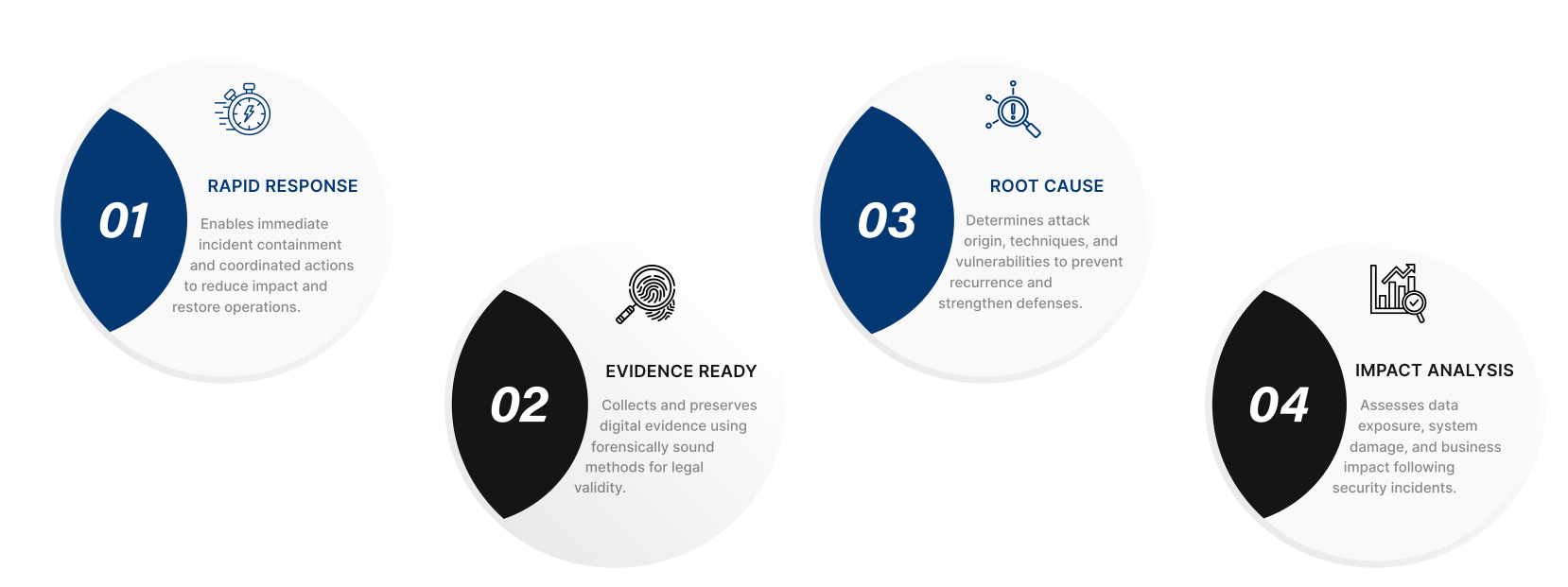
Our Digital Forensic & Incident Response (DFIR) solution helps organizations detect, investigate, and recover from cyber incidents effectively. By combining advanced forensic analysis, rapid containment, and evidence preservation, it identifies root causes, minimizes impact, and supports post-incident remediation — enabling faster recovery and stronger future resilience against cyber threats.
Detailed investigation of digital artifacts to reconstruct attack timelines.
Immediate response actions like isolating affected systems and eradicating threats.
Evidence preservation and chain-of-custody documentation for legal needs.
Post-breach recovery guidance to restore operations securely.
Recommendations for security enhancements based on findings.
Training and simulations to prepare teams for future incidents.
Comprehensive reports on incident details, impacts, and lessons learned.