
Cost Reduction
It helps identify and fix inefficiencies in systems, reducing infrastructure costs.
Precision-Driven Cybersecurity Solutions

Checks data consistency, validates mapping between old and new systems, and confirms that security and compliance standards are maintained.
Let's TalkA Data Migration Audit is a thorough assessment conducted during or after the process of transferring data from one system, format, or storage location to another. It ensures that data is transferred smoothly, accurately, and securely. The audit begins by reviewing the migration plan, checking whether data was prepared properly, backups were taken, and recovery steps were in place in case something went wrong. During the migration, auditors ensure the process follows all required rules and that data remains protected. Once the migration is complete, they compare the original data with the data in the new system to ensure nothing is missing or altered.
This helps organizations maintain accurate and consistent data after migration, which is the foundation of business applications. Auditors also verify that the new system is functioning correctly and that the migrated data is accurate and usable. This assessment helps identify issues early and assures stakeholders that the migration was secure, compliant, and aligned with business objectives. It often involves multiple technologies, systems, and teams working together. Overall, it ensures that migrated data is complete, correct, and ready for effective use in the new system.
Why It Is Important
It helps identify and fix inefficiencies in systems, reducing infrastructure costs.

It helps remove unnecessary or redundant data storage.

It helps confirm that all data is transferred accurately, without errors, corruption, or loss.

It reviews backup processes, validation checks, and recovery plans to ensure data is protected throughout the migration.

It helps ensure that applications, reports, and operations dependent on the data function as expected after migration, preventing business disruption.

It builds trust in the new system and reduces concerns about its reliability.

It helps uncover weaknesses in the migration process, such as poor planning, inadequate testing, or lack of documentation.

It helps hold the right people accountable and supports future reviews or investigations by analyzing logs, access controls, and change records.
It helps identify and fix inefficiencies in systems, reducing infrastructure costs.
It helps remove unnecessary or redundant data storage.
It helps confirm that all data is transferred accurately, without errors, corruption, or loss.
It reviews backup processes, validation checks, and recovery plans to ensure data is protected throughout the migration.
It helps ensure that applications, reports, and operations dependent on the data function as expected after migration, preventing business disruption.
It builds trust in the new system and reduces concerns about its reliability.
It helps uncover weaknesses in the migration process, such as poor planning, inadequate testing, or lack of documentation.
It helps hold the right people accountable and supports future reviews or investigations by analyzing logs, access controls, and change records.
What Our Solution Delivers
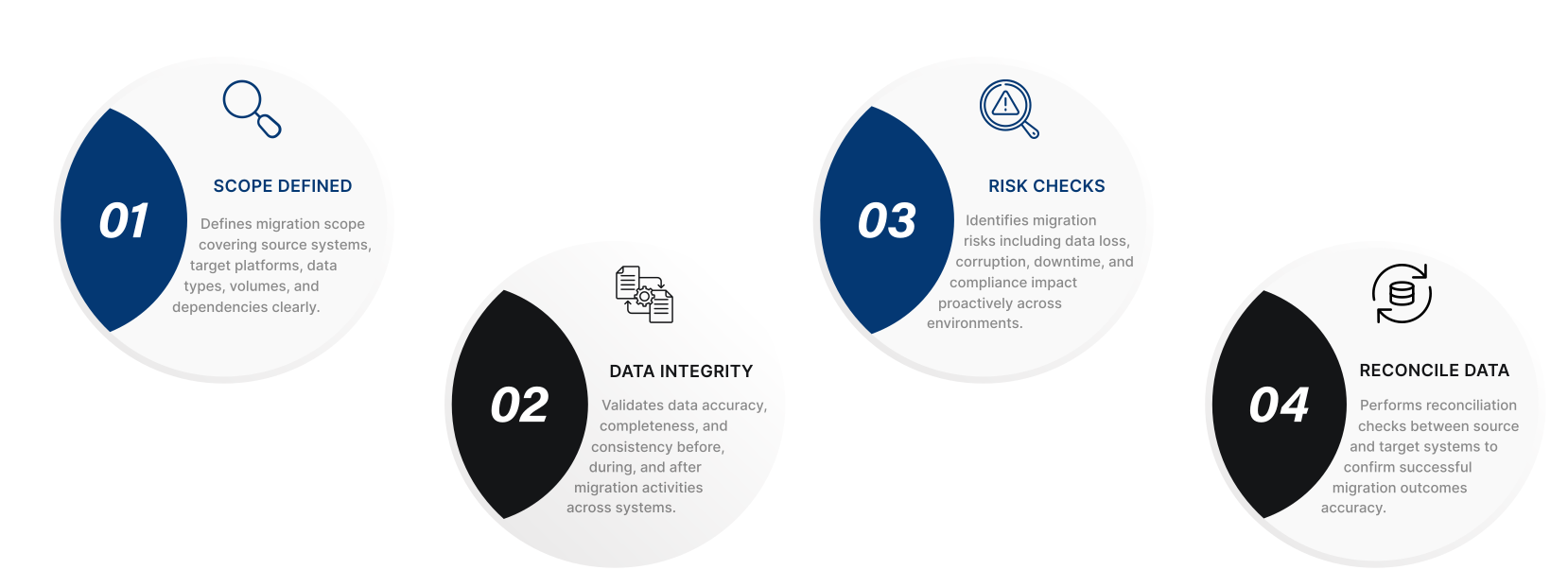
Our Data Migration Audit solution ensures the secure, accurate, and compliant transfer of data between systems or environments. By validating data integrity, mapping processes, and assessing controls, it identifies potential risks, prevents data loss or corruption, and ensures a smooth, reliable migration aligned with organizational and regulatory requirements.
It ensures that all data is transferred correctly without changes, corruption, or loss, and confirms that data in the new system matches the original system.
It helps identify issues such as data loss, incomplete transfers, or file corruption early and provides ways to fix them.
It checks whether proper backup and recovery plans are in place so data can be restored if something goes wrong.
It improves data quality, leading to better reporting, analysis, and decision-making.
It verifies that reports generate correctly, applications function properly, and users can access required data, avoiding disruptions that impact productivity or customer service.
It helps reduce legal risks and builds trust with clients.